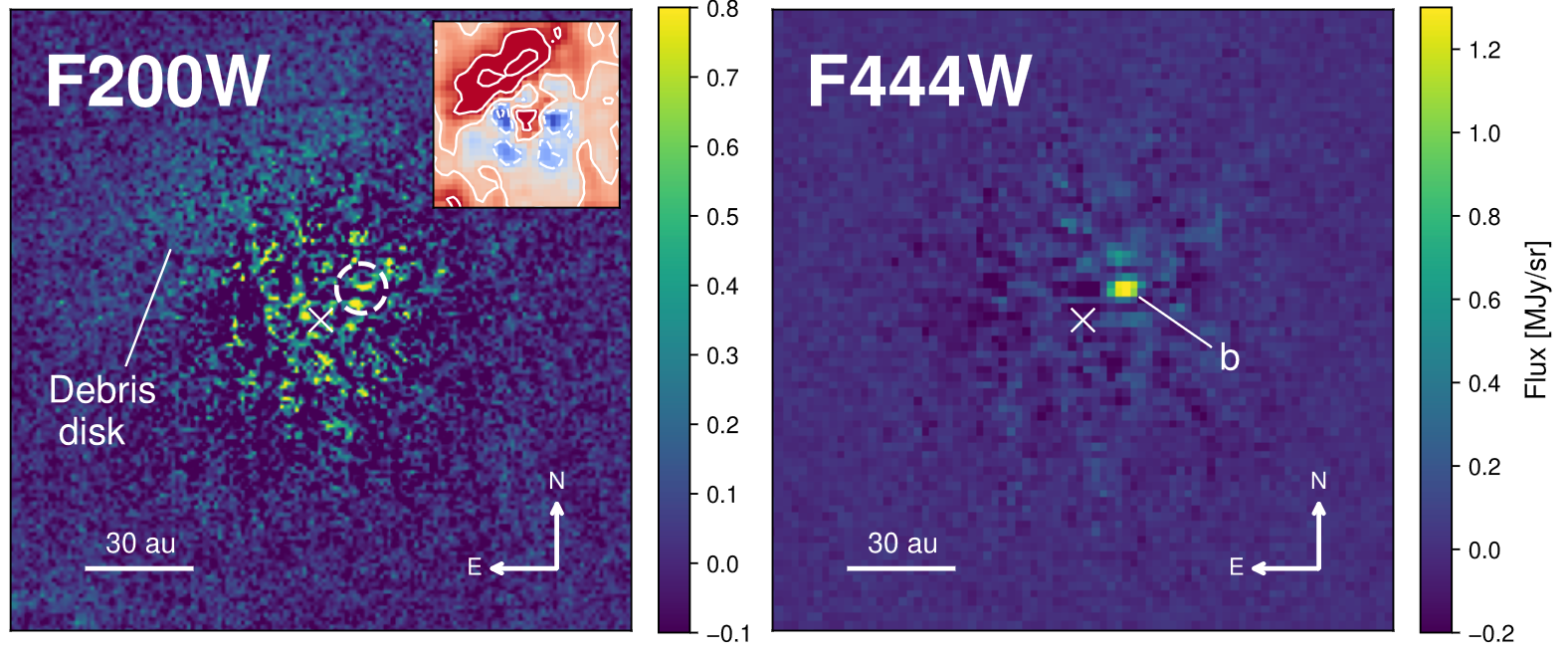
Figure 1 from paper: JWST/NIRCam image of the RX J0534 system.
Summary
I led the analysis of JWST observations that discovered and confirmed RX J0534.0-0221 b (RX J0534 b), a directly-imaged giant planet orbiting an M dwarf in Beta Pictoris. This is one of the rare giant planets directly-imaged with an M dwarf host, and (depending on how you divide it) the first one orbiting at Solar System scales (14 au) to be confirmed with common proper motion. This planet is a great laboratory to study the formation of giant planets around low-mass stars, which are typically a challenging outcome of planet formation. You can read the paper here.
Paper abstract
We present the discovery of RX J0534.0-0221 b, a giant planet orbiting an M-dwarf star in the $\beta$ Pictoris moving group. RX J0534 was originally observed with JWST/NIRCam in the F444W and F200W filters. Observations in F444W reveal a point source at signal-to-noise ratio $\sim17.5$ at $\sim0.’’{41}$ ($\sim14$ au) from the host star, with no detection of the source in F200W. A follow-up observation with LBTI/LMIRCam in $L’$ band re-detects the source 16 months after the JWST epoch, providing evidence for common proper motion over a chance alignment with a background interloper at the $6-7\sigma$ level. Atmospheric grid model fits to the available photometry yield bolometric luminosity $log_{10}(L/L_\odot) = -5.48^{+0.10}_{-0.19}$ dex.
At an age of $18-26$ Myr, hot-start evolutionary models predict $M=2.8(+0.5, -0.5)$ Jupiter masses and effective temperature $674(+57,-49)$ K. From the $L’-F444W$ color and magnitudes we find evidence for disequilibrium chemistry or enhanced metallicity in the planet atmosphere. Additionally, an extended structure is detected in the JWST F200W observation, consistent with a resolved debris disk with peak density radius of $79(+3,-3)$ au and an inclination of $56.5(+1.5,-1.5)$ deg.
RX J0534 b is one of the lowest-mass planets imaged to date. After TWA 7 b, it is the second imaged planet around an M-dwarf orbiting at Solar System scales (the first within 50 au), and the first to be confirmed via common proper motion. Future orbital monitoring and atmospheric characterization will shed light on its formation history, a particularly interesting question given the challenging nature of giant planet formation around M-dwarfs.
Citation
Rodrigo Ferrer-Chavez et al 2026 ApJL 1010 L19.
@article{ferrerchavez2026a,
  title={The JWST Sub-Jupiters Survey: Direct-imaging Discovery of a Giant Planet and a Debris Disk around the Young M Dwarf RX J0534. 0-0221},
  author={Ferrer-Chavez, Rodrigo and Wang, Jason J and Wagner, Kevin and Lawson, Kellen and Carter, Aarynn L and Biller, Beth and Bendahan-West, Rapha{\"e}l and McCreery, Patrick and Luppe, Patricia and Ertel, Steve and others},
  journal={The Astrophysical Journal Letters},
  volume={1010},
  number={1},
  pages={L19},
  year={2026},
  publisher={The American Astronomical Society}
}