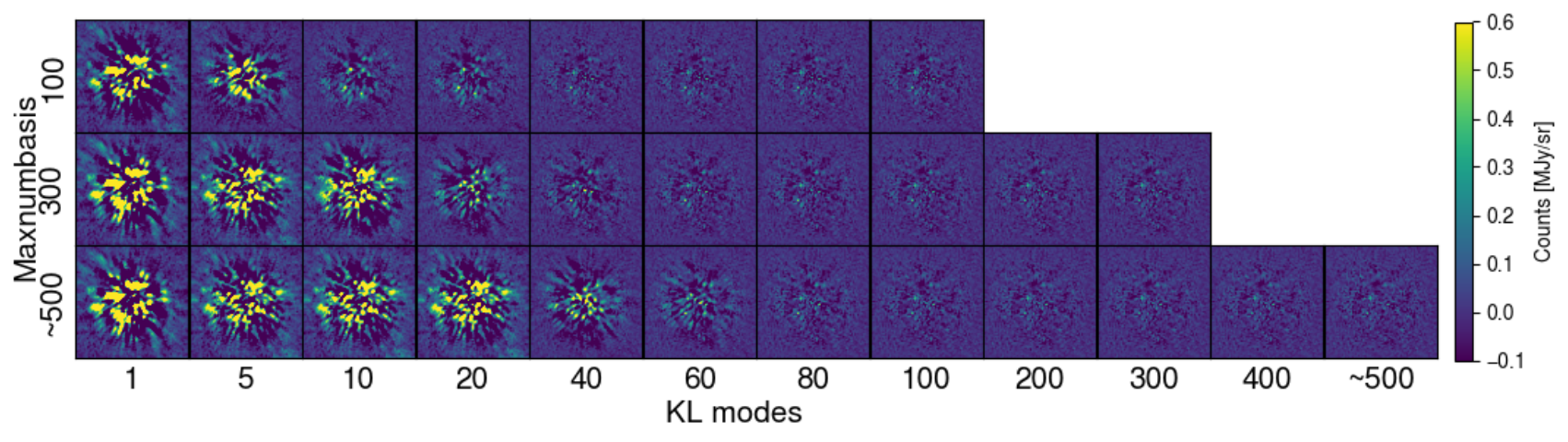
Figure 3 from paper: Visualizing the sensitivity gained from a large set of reference stars.
Summary
JWST is the only observatory for the foreseeable future that will be able to directly image wide-separation, sub-Jupiter mass exoplanets. Its extraordinary near-infrared and mid-infrared sensitivity make it ideal to discover and characterize the atmospheres of young, low mass giant planets.
I am leading the systematic analysis of more than 100 JWST/NIRCam coronagraphic observations aiming to find the lowest mass planets directly imaged to date (PIs: Aarynn Carter and Beth Biller). In particular, I assembled and processed a large library of reference stars (which are necessary for traditional starlight subtraction), and quantified the sensitivity space afforded by this library.
This dataset, in various forms, has been extensively used by our collaboration to image faint planets (Ferrer-Chavez et al. 2026a), debris disks (Crotts et al. 2025,Palatnik et al. 2025,Crotts et al. 2026) and to quantify the planet detection sensitivity of JWST/NIRCam (Strampelli et al. 2026).
The dataset is publicly available in this Zenodo repository, with usage instructions in this Github repository.
You can read the paper here.
Paper abstract
The excellent infrared sensitivity of JWST allows direct imaging of young low-mass (below 1 Jupiter mass) giant planets for the first time, with several JWST programs being carried out for this purpose. However, the detection sensitivity of these observations crucially depends on subtracting the residual light of the host star to reveal faint astrophysical signals. This requires high quality observations of reference stars to build an empirical starlight model.
Here we present a homogeneously processed reference star library of targets observed with programs GO 4050, GO 5835 and SURVEY 6005, which enable PSF subtraction via reference star differential imaging. These observations were taken with the MASK335R coronagraph mask and in dual-filter F444W/F200W mode. Our library consists of 247 observations (counting both filters separately) of 100 different stars of spectral types mostly F to M, with a total of 1110 individual integrations. We explore the PSF subtraction hyper-parameters with the KLIP algorithm that maximize sensitivity, and we show the performance of our library compared to and in addition to contemporaneous reference observations.
We show that our library improves sensitivity at close separations in most tested cases, with improvement factors from $\sim1.3$ to $\sim2$ at some separations. As practical recommendations, we find that our library is best used as a complement to contemporaneous reference observations to further improve sensitivity, since in all our experiments contemporaneous references are needed for best sensitivity. We make the PSF library publicly available for the high-contrast imaging community.
Citation
Ferrer-Chavez, Rodrigo, et al. “The JWST Sub-Jupiters Survey: The impact of a large JWST/NIRCam PSF library on exoplanet imaging detection sensitivity.” arXiv preprint arXiv:2611.18912 (2026).
@ARTICLE{ferrerchavez2026c,
       author = {{Ferrer-Chavez}, Rodrigo and {Wang}, Jason J. and {Carter}, Aarynn L. and {Biller}, Beth and {Bogat}, Ellis and {Kane}, Rohan and {Strampelli}, Giovanni M. and {Balmer}, William O. and {Booth}, Mark and {Perrin}, Marshall and et al.},
        title = "{The JWST Sub-Jupiters Survey: The impact of a large JWST/NIRCam PSF library on exoplanet imaging detection sensitivity}",
      journal = {arXiv e-prints},
     keywords = {Earth and Planetary Astrophysics, Instrumentation and Methods for Astrophysics},
         year = 2026,
        month = nov,
          eid = {arXiv:2611.18912},
        pages = {arXiv:2611.18912},
          doi = {10.48550/arXiv.2611.18912},
archivePrefix = {arXiv},
       eprint = {2611.18912},
 primaryClass = {astro-ph.EP},
       adsurl = {https://scixplorer.org/abs/2026arXiv261118912F},
      adsnote = {Provided by the SAO/NASA Astrophysics Data System}
}